
Water and Wastewater Design
Gray Sewerage Extension
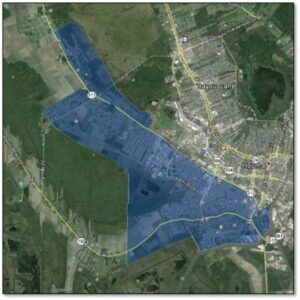
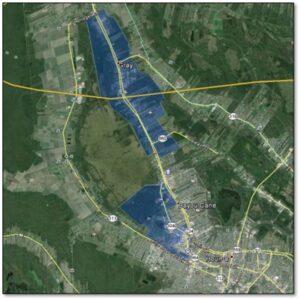
GreenPoint Engineering provided engineering design, construction administration, NEPA compliance and CDBG grant administration services for the project extending wastewater service to the community of Gray in northern Terrebonne Parish. The project qualified for CDBG Disaster Recovery funding following Hurricanes Gustav and Ike, when much of the area in and around the city of Houma area lost power, resulting in sanitary sewer overflows at the Fairlane Drive WWTP. Further, unprecedented residential and commercial growth in the community required the expansion of wastewater service to meet new demand, as the coastal population shifts toward less flood prone areas.
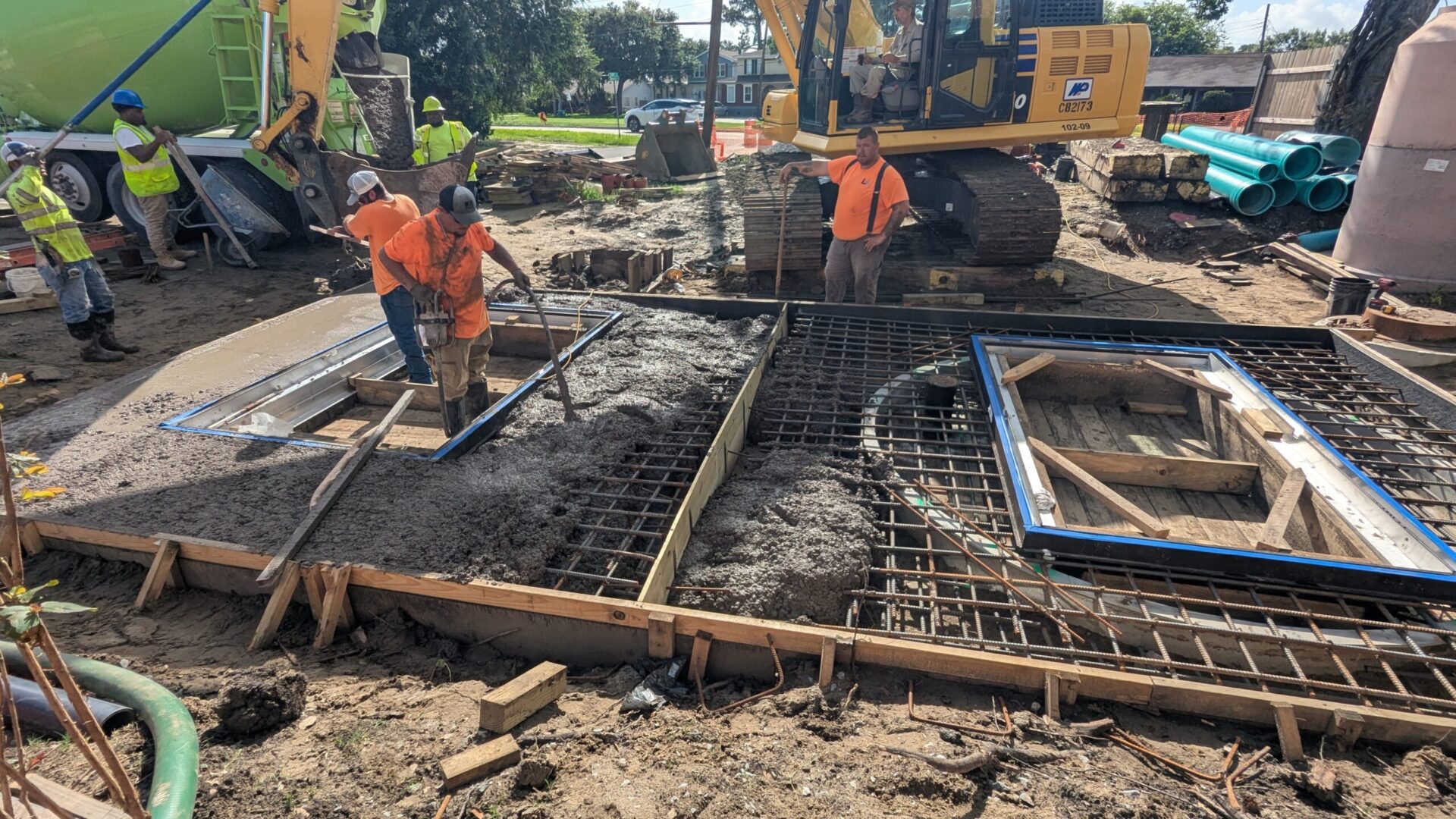
GreenPoint prepared the CDBG disaster recovery application to fund the project, and prepared the Environmental Review Record documenting NEPA compliance for eligibility. GreenPoint then prepared the design of the project,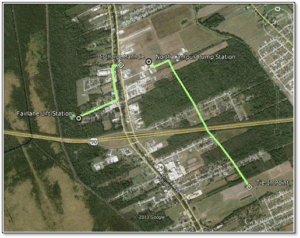 consisting of the design of a new variable speed 2.5 mgd wastewater pump station, de-commissioning of the Fairlane Drive WWTP, re-routing its flow to the new station, rehabilitation of an existing lift station and the design of over 11,000-ft of new 6-inch and 14-inch HDPE force mains, installed by horizontal direction drilling, tying the consolidated facilities to the Parish’s North Regional WWTP.
The design of the new North Campus station required modeling of the four existing downstream pump stations that contribute to the manifolded system in SewerCAD. This was a critically important step, as the new station’s operating conditions could vary significantly under their influence.
The station’s design also included backup generator power and a controls building to house the control panels, variable speed drives and SCADA system.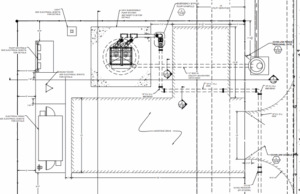
Renovations of the Oakshire and Southdown No. 2 Holding Basins
Along with the typical gravity sewers, pumping stations, and force mains, the Terrebonne Parish collection and conveyance system also consists of a series of intermediate holding basins, originally installed with large pump stations to provide regional storage capacity during peak wet weather sewer flows. However, over time these holding basins became an ongoing source of odors and costly maintenance demands, and also became the source of occasional sanitary sewer overflows (SSOs).
GreenPoint determined that these problems result from restrictions within the networked force main system and from operating the holding basins in a normally wet condition, as incoming flow is routed to the basin before it is pumped. In addition to the odors that are associated with raw sewage, the long-term storage of wastewater within the basins promoted anaerobic activity, creating biosolids accumulation within the basin and requiring frequent and costly dredging.
To address these issues at the Oakshire and Southdown No. 2 facilities, the two largest regional pumping stations and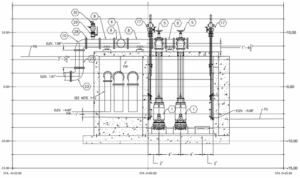 holding basins in the system, GreenPoint modeled the pressure system using historic flow and rainfall data in SewerCad to illustrate the performance of the 19 networked contributing stations. This model demonstrated the flow rates to the holding basins under normal conditions and under wet weather events up to the 10-year storm, and the impacts upstream as the pressurized force main network reacts to the operation of the manifolded stations. The model also predicted the storage volumes required to capture the excess and mitigate the risk of SSOs flow under various conditions. The analysis revealed that with new larger pump stations at each site, the basins could be operated in a normally dry condition, thereby alleviating the cause of odors and eliminating the need for maintenance dredging. Modifications to the networked force mains would also alleviate the restrictions within the network, increasing capacity and reducing the risk of overflows upstream.
GreenPoint’s design delivered a 6.1 mgd station at Oakshire and a 7.9 mgd station at Southdown No. 2. The submersible, variable speed pumping stations are sized to capture 95% of historic flows, and include biological odor control systems as well as SCADA. Extreme wet weather events exceeding the stations’ capacity are diverted by weir gates to the holding basins and drained to the stations’ wet wells via slide gates once the peaks subside. GreenPoint’s designs also included the dredging, dewatering, and disposal of the years’ of biosolids accumulated within the basins.
The project has achieved the goal of reducing nuisance odors and has greatly mitigated the risk of overflows. More importantly, the cost of operating the stations has been greatly reduced, and the long-term maintenance cost associated with periodic dredging are eliminated.
Goodbee Regional Wastewater Treatment Plant Expansion
The Goodbee area of western St. Tammany Parish is in the midst of growth and required the expansion of wastewater treatment infrastructure to meet the demands of new developments. To meet this demand, St. Tammany Parish Government engaged GreenPoint to design a new regional wastewater treatment plant to serve this rapidly growing area.
Population Growth Objectives
The December 2020 West St. Tammany Water and Wastewater Consolidation Conceptual Design Report guides the design of the wastewater treatment and conveyance system improvements necessary by establishing the capacities, locations, and general concept of the facilities needed. The projected demand in the Goodbee service area justifies the
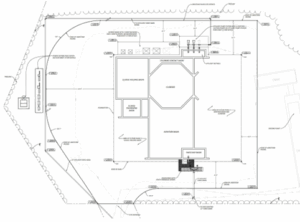 need for a 700,000 gallon per day (gpd) treatment plant. However, given the rate at which the Goodbee service area will expand over the coming years is unknown, the first train of a dual-train plant, providing an initial capacity of 350,000 gpd, will be constructed first. Once the flow reaching the plant approaches 350,000 gpd, the second parallel train will be added to accommodate the growth in the service area, achieving the ultimate capacity of 700,000 gpd. Though this approach requires phased construction, it allows the Parish to better accommodate growth and distribute costs as the service area expands. Such an approach will ultimately provide the Parish a redundant system that improves flexibility for maintenance.
Advanced Treatment Process Design
As the Parish elected to implement a conventional aerated biological treatment process, GreenPoint’s design allows for solids retention time sufficient to allow ammonia removal by nitrification. The design also includes a headworks structure with screening equipment. Disinfection is by ultraviolet light, and the residual biosolids are settled in a conventional clarifier and prepared for final disposal offsite through aerobic digestion.
Processing of Residual Solids
To reduce the volume of waste solids requiring transportation, and to reduce odors and pathogens, the design includes thickening of waste activated sludge and further treatment by aerobic digestion. Because the Parish does not intend to achieve Class B solids for land application of the processed solids, requiring retention times of 40 to 60 days, the aerobic digester volume is significantly smaller, sized for a 28-day retention, while still achieving significant volume and pathogen reduction.
Effluent Pump Station
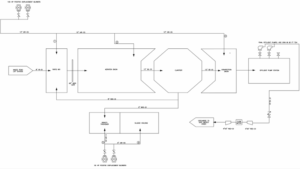
A new effluent pump station that can be expanded to meet the ultimate capacity as well as a new effluent force main are included in the design. The new effluent pump station provides the capacity necessary to meet the peak 2-hour demand expected at the ultimate plant capacity, or 2,000 gpm. The design incorporates a subgrade wet well, using vertical turbine effluent pumps. The wet well is partitioned to allow isolation of half of the volume for maintenance and cleaning.